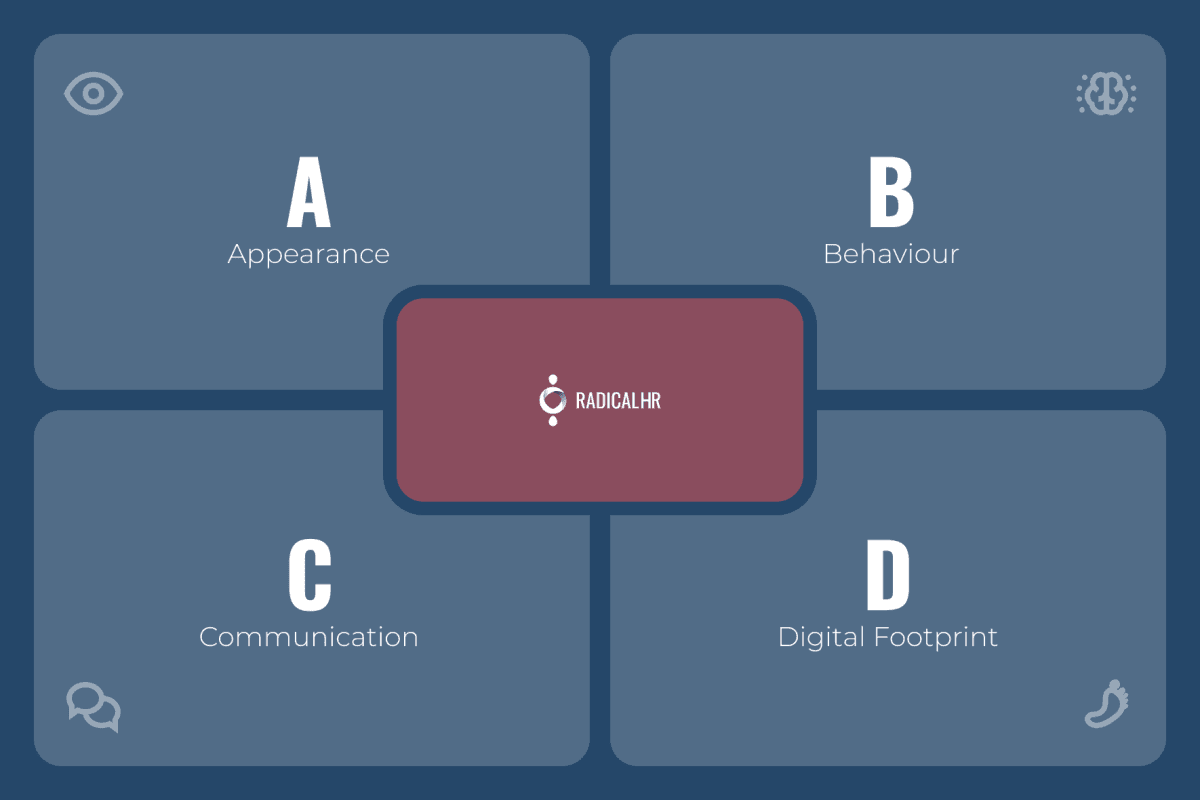
ABCD MODEL for the dissemination of digital skills
The ABCD Model canvas provides a structured approach that enables HR to guide the learning design process effectively, adapting to the specific needs of the company and its employees.
download the canvas for free
The advantages of the canvas for HR
Market awareness
Do we have an observatory, even an informal one, able to map the market and design the program in line with the latest trends and developments in the field?
Do we consequently have the expertise to design the pathway internally, or do we need to rely on external parties?
Initial mapping of internal competencies
Does the program we are designing take into account the background of the learner persona(s)?
Are we able to easily determine the maturity stage of these resources regarding the skills being trained?
Final training objectives
What is the target level of training for each learning persona?
How is it perceived by the learning persona as strategic for their professional growth?
Training design, according to the ABCD funnel
Depending on the target level of the training, have I completed all the steps necessary to achieve effective adoption of the skill being trained (i.e., the steps of the ABCD funnel)?
I am measuring the effectiveness of the training flow to optimize the funnel
RADICAL HR’s Learning Strategy Canvas will help you explore these elements within your company and organize the relevant information to outline your Learning Strategy. The work can be done independently or in a group, for example in a workshop: contact us if you think support could be useful in organizing a productive discussion moment effectively within your organization.

Market awareness
Digital skills are continually renewed, as they are subject to ongoing developments linked to the growth of technologies. When deciding to carry out strategic training related to the adoption of new processes and tools, it is essential to be able to identify trends with a view to structuring training that remains strategically relevant over time. If there is no internal observatory, HR can involve internal or external experts during the design phase to gain an overview, in relation to business objectives, of the strategic and technical skills to be introduced into the design.
In this phase, therefore, make sure to:
actively involve internal KOLs (key opinion leaders), giving them sustainable and engaging tasks in the design of the training
involve external experts to compare internal sentiment with that of the market
Internal skills mapping
Given the training topic itself, where do the internal resources start from? Is it an advanced upskilling process, or are we starting from scratch? It is important to answer these questions so as not to waste time and budget by starting from the wrong initial point. Obviously, the larger the population to be trained becomes, the more diversity there will be among the resources involved, which will be addressed in the ABCD model with a modular and progressive approach.
Attention! It is important to set up constant mapping (and self-assessment) processes in order to design iterative processes, measuring the outputs of the journey to continuously optimize it.


Final training objectives
We know what we want to train people on and what level each of them is starting from. Now it is time to define where each of them should aspire to get to! Different learning personas will have different goals, and we will need to study a strategy that allows each of them to grow effectively, dedicating the right effort to the project.
At this stage it is important to study goals that are not only linked to business needs, but that also enhance personal aspirations for professional growth. Otherwise, the training will lose its appeal and will be perceived as an imposition, rather than a reward and an incentive to evolve one’s profile.
Training design, according to the ABCD funnel
Starting from what we defined in the third phase, we will use the ABCD framework.
Each action corresponds not only to a different objective, but also to different required effort, reach of the attainable target audience, and depth of the training.
When setting up a training path aimed at achieving a certain objective, we must make sure we have first followed the previous steps of the framework, in order to aim for the most effective impact possible.

The Learning Strategy is a systematic and strategic action plan that an organization develops and implements to guide, facilitate, and optimize its people’s learning process. It is designed to achieve specific goals related to skills acquisition, innovation, professional growth, and improving business performance.
Download the Learning Strategy Canvas: design your learning strategy!
download the canvas
useful for the canvas
Collecting feedback to assess the process
Provide spaces where the model can be customized
Include an initial introduction to what the ABCD model is
Evaluation metrics: number of participants involved, regular assessment of the gap between desired skills and currently possessed skills
Request information

1.
Download and try to complete the ABCD model Canvas.
2.
Fill in the canvas by answering the questions listed above
3.
Present the projects identified through the Canvas to Management
4.
Organize a new workshop involving leadership to design the Action Plan using the Canvas.
download the canvas
Implement the canvas in your company with the support of RADICAL HR.
Consulting