Future of Work Trends 2026
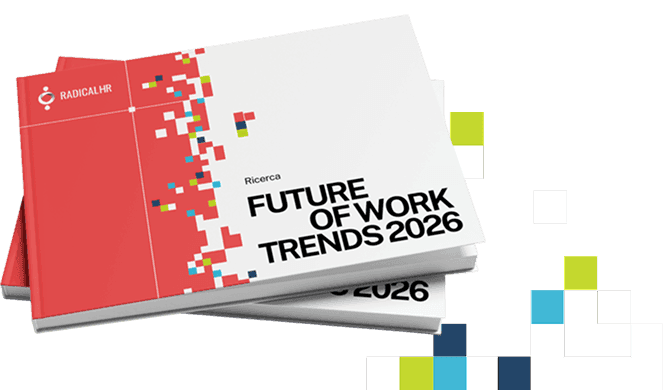
The latest research from the RADICAL HR Observatory on the future of work and the trends that will dominate 2026.
download the paper
Challenge 2026: Agentic Organization
Alongside the trends, Future of Work Trends 2026 introduces a key challenge for the world of work: the Agentic Organization. Organizations are evolving toward models in which people, intelligent systems, and artificial agents actively participate in work and decision-making processes. Action is no longer concentrated in a single point, but distributed.
How do responsibilities, coordination, and decision-making change when the organization becomes agentic?
The Future of Work Observatory explores this transformation to offer HR and leadership a useful lens for designing structures, roles, and organizational models aligned with this new scenario. Within the research, this challenge is analyzed to provide HR and leadership with clear guidance on how to navigate and act in this new work scenario.
The research
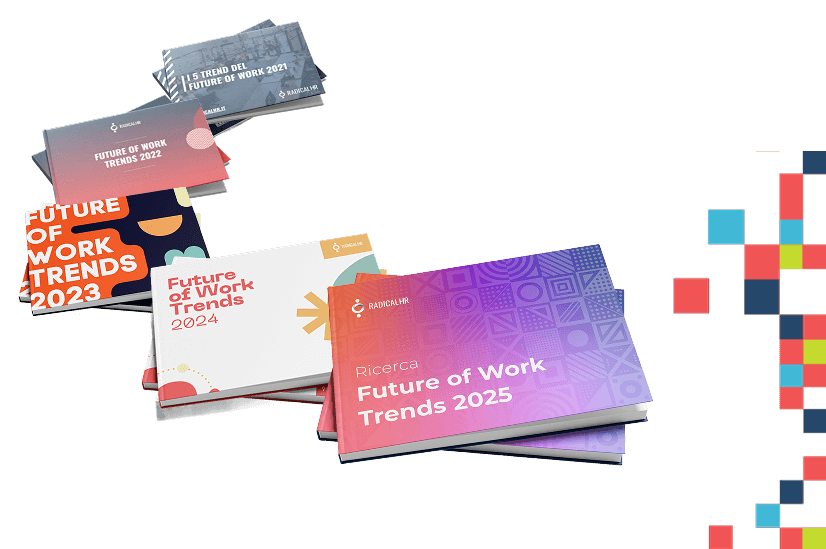
Since 2021, RADICAL HR's Future of Work Observatory has been analyzing future of work trends and how organizations and decision-making roles evolve, offering HR and leadership concrete insights to guide strategic choices in increasingly complex contexts.
download the paper
The trends to watch in 2026:
HR FUTURE-READY
The HR function is entering a phase of strategic maturity. It brings together contextual understanding, data use, and technology integration to support organizational decisions
that are increasingly complex. In more advanced organizations, HR is expected to anticipate scenarios, measure impacts, and translate insights into choices that affect structure, skills, and priorities.
LEADER OF CHANGE
ARCHITECT
Leadership takes on a design role. Leaders work on building contexts, managing transitions, and enabling
autonomy. This trend reflects a profound change: leading means designing systems that make continuous change possible, rather than exerting control over individual people or activities.
PROFESSIONAL LONGEVITY
Working life is getting longer and less linear. Organizations are having to manage more fragmented careers, skills that become obsolete quickly, and professional needs that are constantly evolving. Professional longevity is becoming a strategic lever that requires new models of learning, mobility, and development over time.
SKILLS-FLOW MODEL
Skills circulate within organizations in an increasingly dynamic way. Models based on fixed roles are giving way to systems in which skills are activated, combined, and shifted according to priorities. Managing these flows becomes central to allocating value, accelerating execution, and responding to change.
RADICAL AUTONOMY
Autonomy reshapes the relationship between trust, responsibility, and coordination. People make decisions closer to the real work, while the organization rethinks processes, goals, and accountability mechanisms. This trend looks at how structures change when autonomy becomes an organizational lever, not just a cultural one.